
Research & Development (R&D)
Advancing active pharmaceutical ingredient synthesis through cutting-edge chemical research, analytical excellence, flow chemistry, and green biocatalytic synthesis.
R&D Infrastructure Details
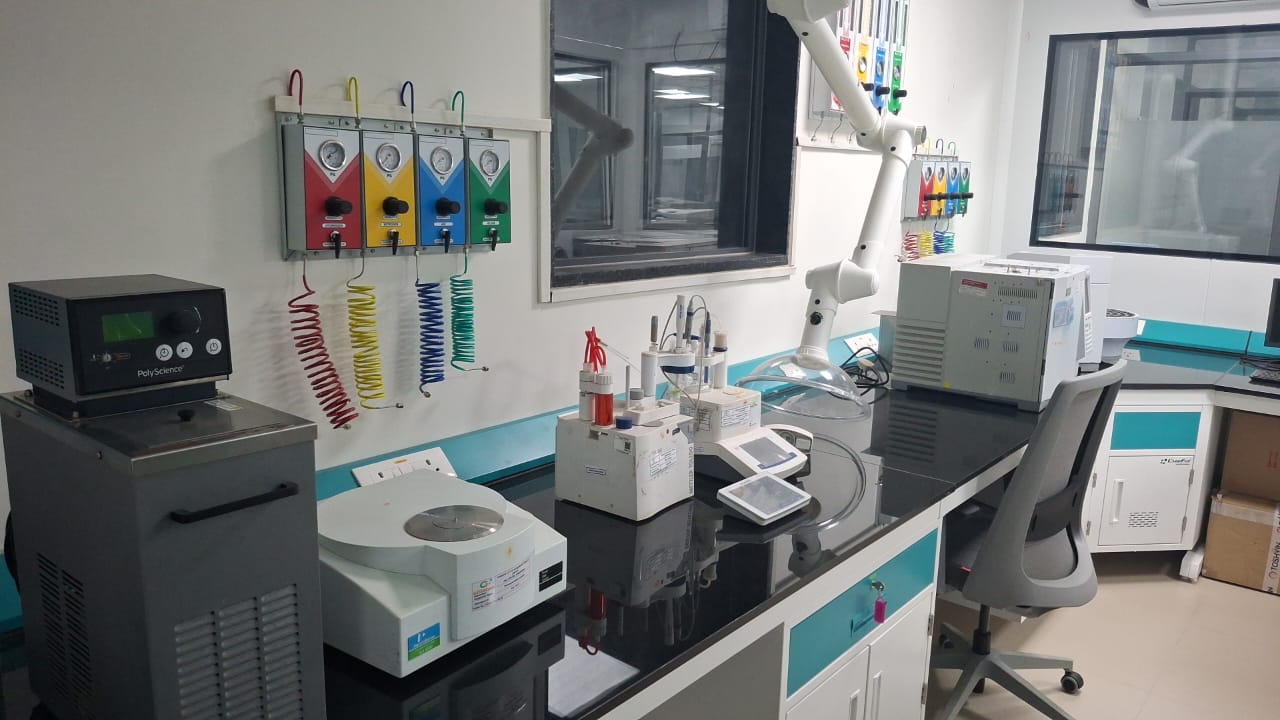
Fully equipped across 18,000+ Sq. Ft. built-up area with multi-FTE synthesis scale, continuous flow chemistry, and climate-controlled analytical suites.
Hyderabad (3 centres), Nellore (1 centre), and Ahmedabad (1 centre).
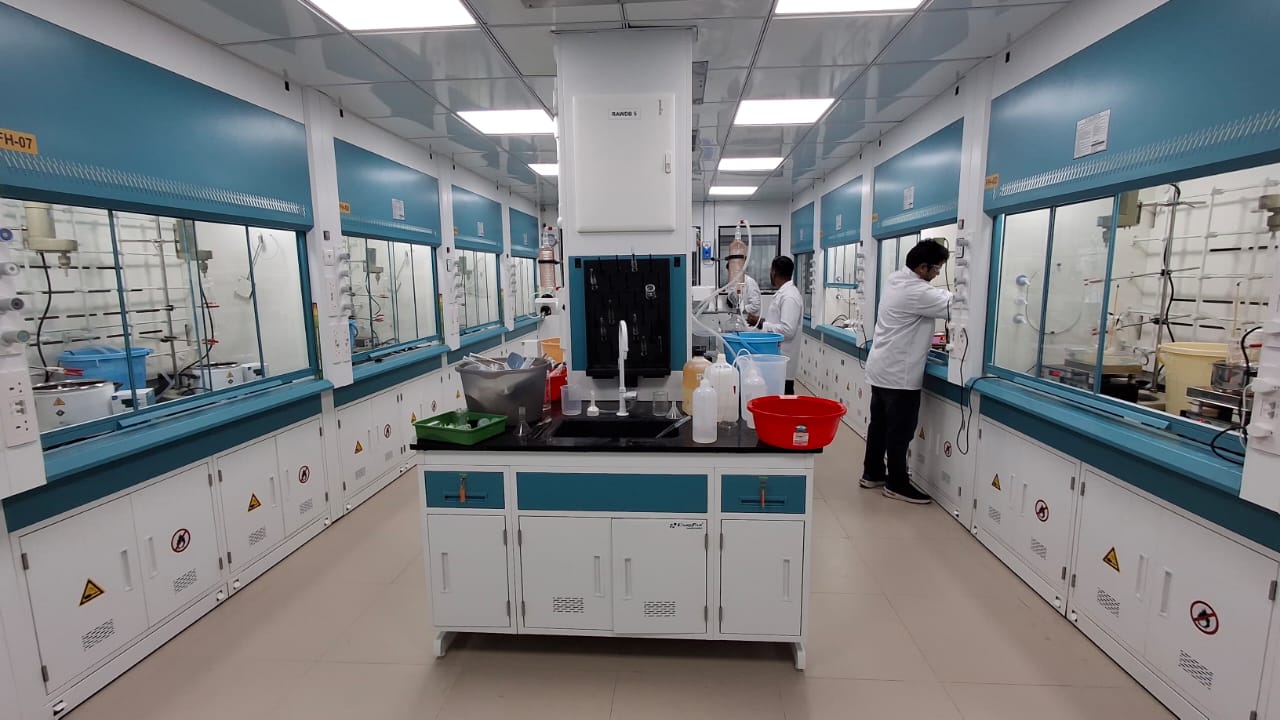
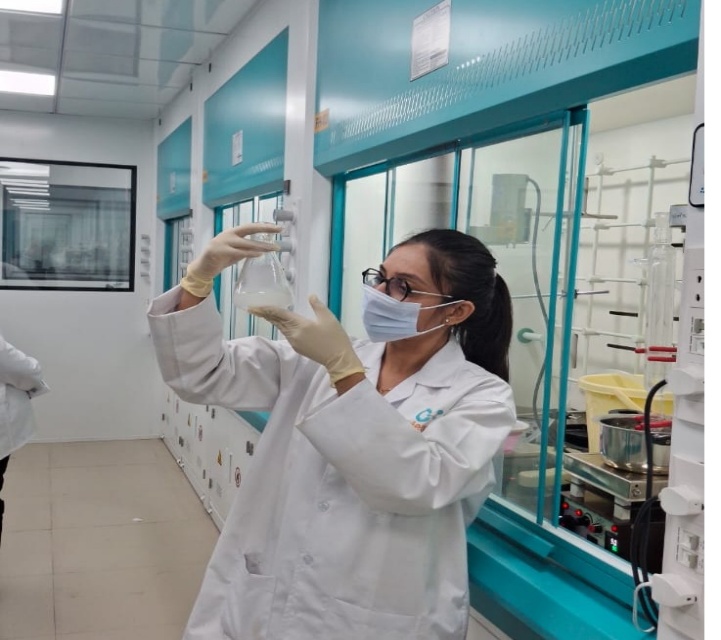
Purpose-built chemical process & analytical laboratories.
03 Synthesis labs & 04 Analytical labs across multi-FTE scale.
Automated Julabo 3L GLRs, Kilo Lab @ 100L scale, and Pilot Plant integration.
Synthesis & Scale-Up Infrastructure
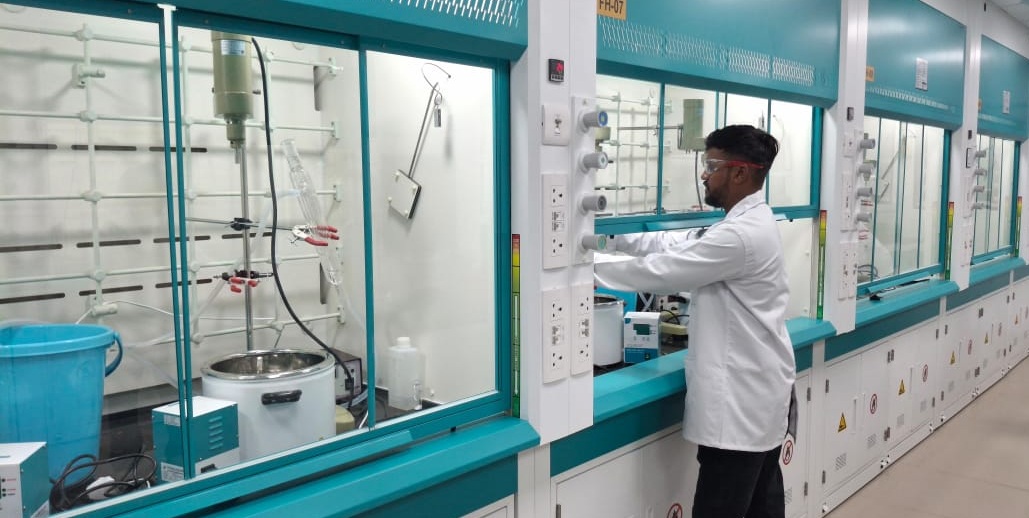
- Walk-in and standard fume hoods (40 total): Engineered for high-throughput multi-FTE synthesis, gas scrubbing, and hazardous reaction safety.
- Automated Julabo 3L GLRs: Precise temperature-controlled glass lab reactors (-80°C to +200°C).
- Kilo Lab @ 100L Scale: Intermediate batch escalation for process validation and registration batches.
- Pilot Plant Integration: Seamless tech transfer directly to 350+ KL commercial production blocks.
Analytical & Characterization Suite
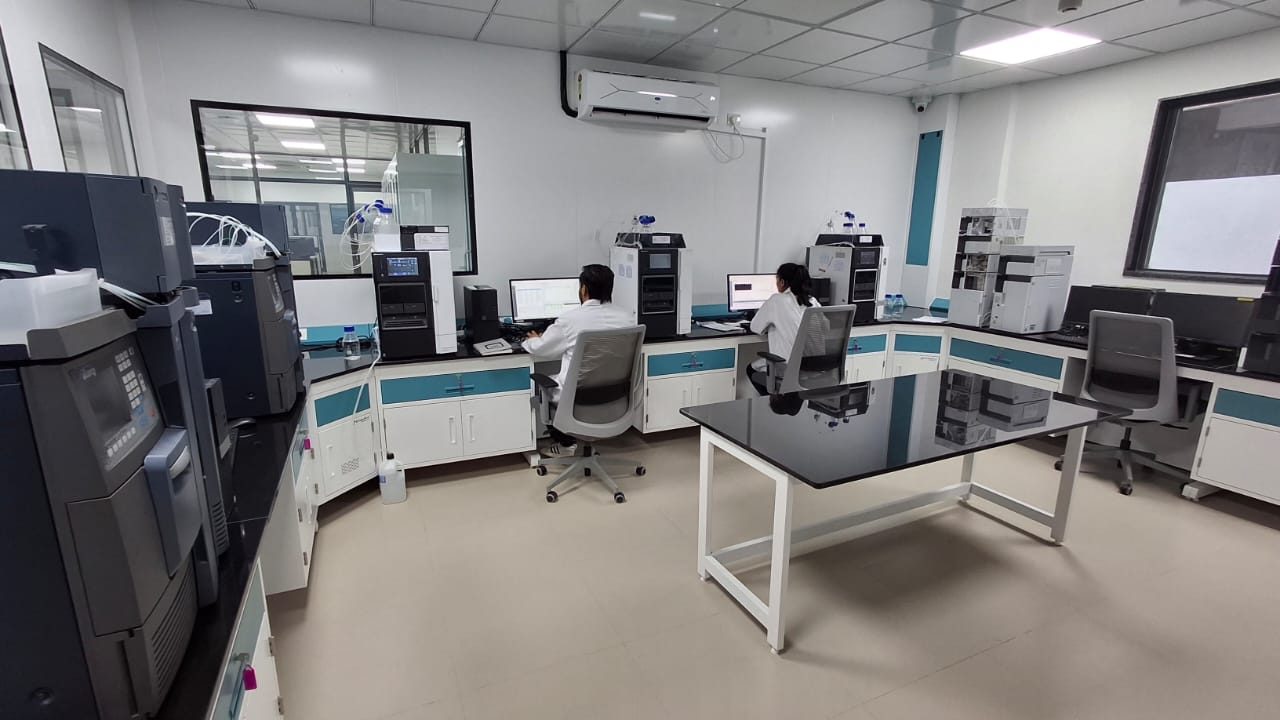
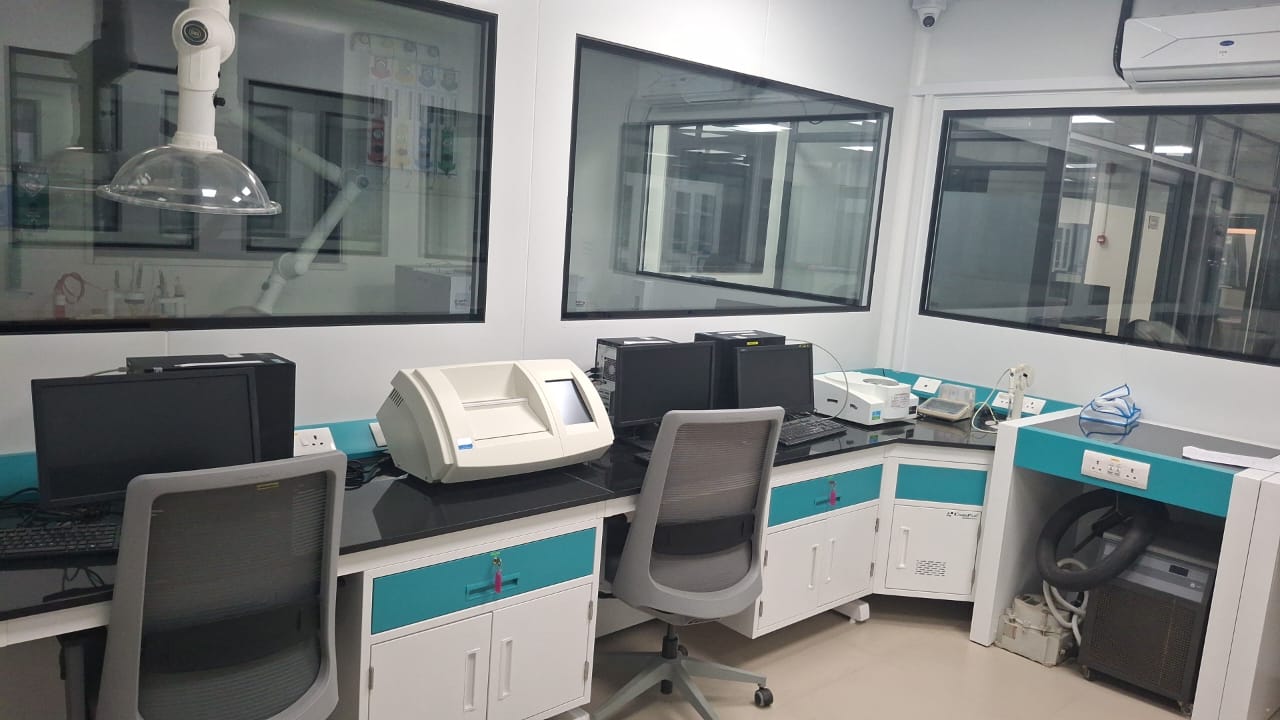
State-of-the-art Analytical labs equipped with advanced instrumentation for trace impurity screening, solid-state polymorph screening, and ICH stability:
Business & R&D Units
Glochem Development & Manufacturing Solutions
F7A & C10, BTIC Park Synergy Square 1, Genome Valley, Shamirpet Mandal, Medchal Malkajgiri District, Hyderabad - 500101
CDMO Process Synthesis & Development Lab
Multi-FTE chemical synthesis, route scouting, and scalable reaction optimization for custom intermediates and generic APIs.
Analytical Development Lab (ADL) & Impurity Center
Method development, validation, genotoxic impurity profiling (TTC approach), LC-MS/MS & GC-MS/MS nitrosamine screening.
Discovery Chemistry & Custom Synthesis Unit
Early building blocks, advanced intermediates, and non-infringing IP route development for global pharmaceutical partners.
API Process Research & Flow Chemistry Center, Ahmedabad
Process development of new APIs and intermediates, introduction of green technologies including flow chemistry for novel process development.
Nellore Process Intensification & Polymorph Screening Center
Solid-state characterization, polymorph screening, crystallization engineering, Cryogenic reactions, hazardous reagent handling, and seamless tech transfer directly integrated with PB-1 manufacturing units.
Chemistry Capabilities
Our scientists specialize in multi-step chemical synthesis, high-hazard reactions, catalytic transformations, and chiral separations.
Cross-Coupling & Vacuum Distillation
Cross coupling reactions & High Pressure & High Vacuum distillation chemistry for thermal-sensitive high-purity intermediates.
Organometallics & Fluorine Chemistry
Organometallics, Fluorine Chemistry, as well as complex Nucleoside & Carbohydrate Chemistry multi-step synthesis.
Chiral Inductions & Asymmetric Catalysis
Chiral inductions, Asymmetric catalysis & Analysis, and end-to-end process development for single-enantiomer APIs.
Homogeneous Catalysis & Ligands
Cross coupling reactions using specialized homogeneous catalysts & proprietary ligand complexes for maximum yield.
Heterogeneous High-Pressure Hydrogenation
Hydrogenation reactions utilizing heterogeneous catalysts like Raney Ni, Pd/C, Rh/C, and Pt-C in specialized high-pressure autoclave reactors with automated safety trip controls.
Analytical R&D Instrumentation Inventory
Comprehensive list of high-precision analytical equipment across our 4 ADL laboratories.
| S.No. | Instrument / Equipment Description | Make / Brand | Category |
|---|---|---|---|
| 01 | HPLC-MS-MS | Waters | Mass Spectrometry & LC-MS |
| 02 | HPLC with multiple detections (UV / PDA / RI detector) | Waters & Shimadzu | Chromatography |
| 03 | GC-Head Space Sampler | Shimadzu | Gas Chromatography |
| 04 | GC-MS | Agilent Technologies | Mass Spectrometry & LC-MS |
| 05 | X-Ray Diffractometer (XRD) | Advanced Analytical | Solid State & Physical |
| 06 | Thermogravimetric Analyzer (TGA) | Precision Thermal | Thermal Analysis |
| 07 | FT-IR Spectrometer | Perkin Elmer | Spectroscopy & Optics |
| 08 | Preparative HPLC | High Throughput | Chromatography |
| 09 | Particle Size Analyzer | Malvern 3000 | Solid State & Physical |
| 10 | UV-VIS Spectrophotometer | Shimadzu & Perkin Elmer | Spectroscopy & Optics |
| 11 | Melting Point Apparatus | Standard Digital | Thermal Analysis |
| 12 | Micro & Semi-micro Analytical Balances | High Precision | General Analytical |
| 13 | Halogen Moisture Analyzer | Automated | General Analytical |
| 14 | Stability & Photostability Chambers | Climate Controlled | Stability & Climate |
| 15 | Hot-air Oven and Muffle Furnace | Thermal Processing | Thermal Analysis |
| 16 | Differential Scanning Calorimeter (DSC) | Thermal Analysis | Thermal Analysis |
| 17 | Karl-Fischer Auto-titrator | Lab India | Titrators & Wet Chemistry |
| 18 | Potentiometric Auto-titrator | Lab India | Titrators & Wet Chemistry |
| 19 | Digital Polarimeter | Rudolph Autopol | Spectroscopy & Optics |
Process Research Laboratories
40 Fume Hoods & Automated GLRs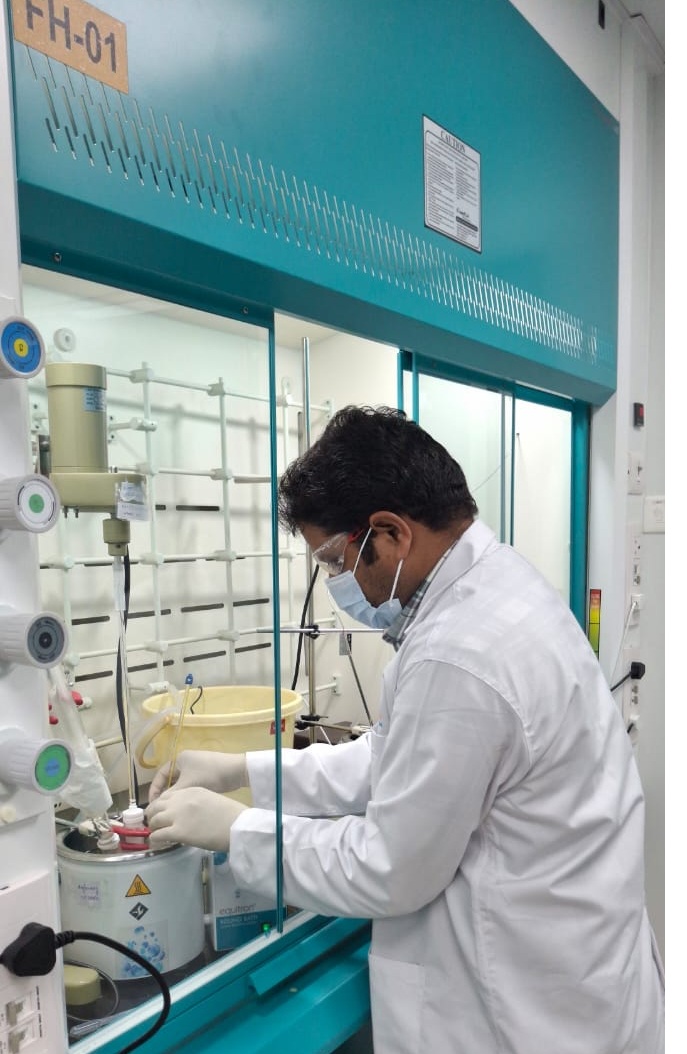
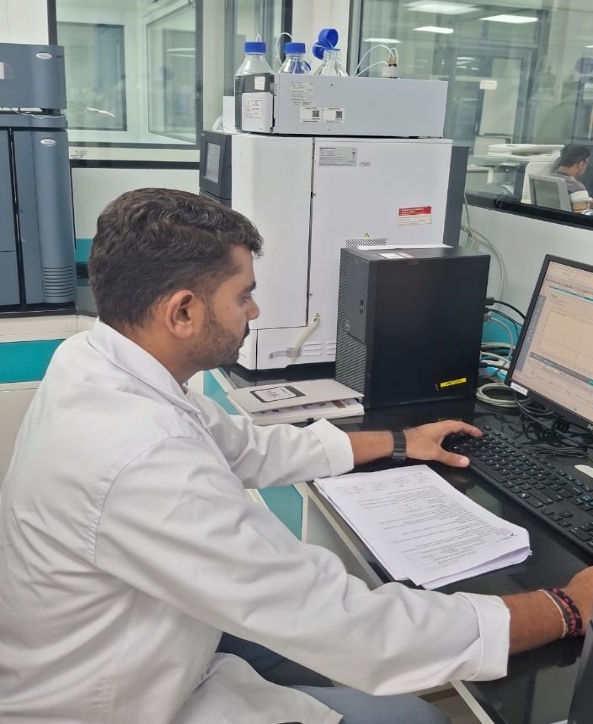
Analytical Development Laboratories (ADL)
LC-MS/MS & GC-MS/MS Impurity Suite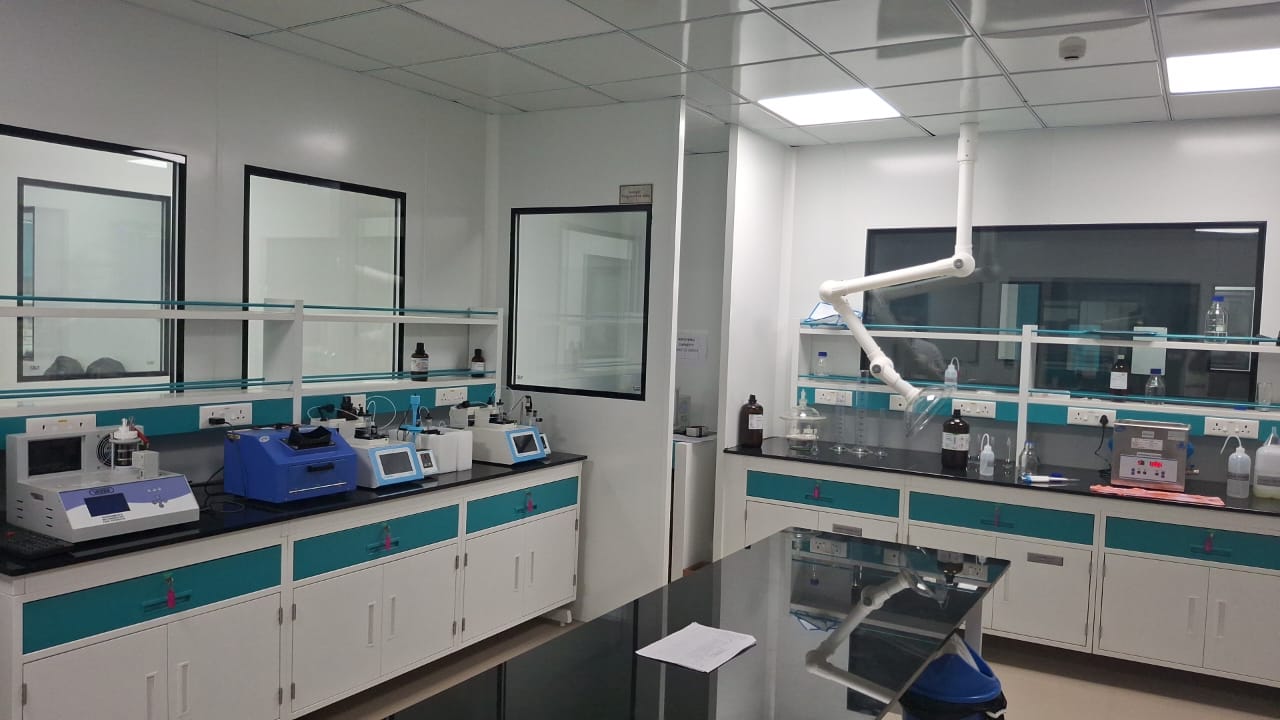
Intellectual Property Management (IPM)
| Category | Details & Capabilities |
|---|---|
| Roles & Functions | Innovation support, Infringement Screening, IP-Validation, Freedom-to-Operate (FTO) Analysis, Non-infringing Route Scouting, Patent drafting & filing, IP-Alerts. |
| Tools & Databases | CAS SciFinder, United States Patent & Trademark Office (USPTO), European Patent Office (EPO), WIPO, Scopus, PubMed. |
| Talent Pool | Registered Indian Patent Agents, Organic Chemistry Ph.Ds, and literature data-mining experts with 15+ years of techno-legal experience. |
| Quality & Data Security | ISO 9001 Quality Assurance, strict Non-Disclosure Agreements (NDA), Enterprise-grade document encryption and secure server backups. |
Initiative – Green Chemistry
Synthetic methods at Chieron are designed to maximize atom economy and minimize environmental footprint. By reducing organic solvent consumption and expanding water-based biocatalysis, our processes lead the industry in sustainability.
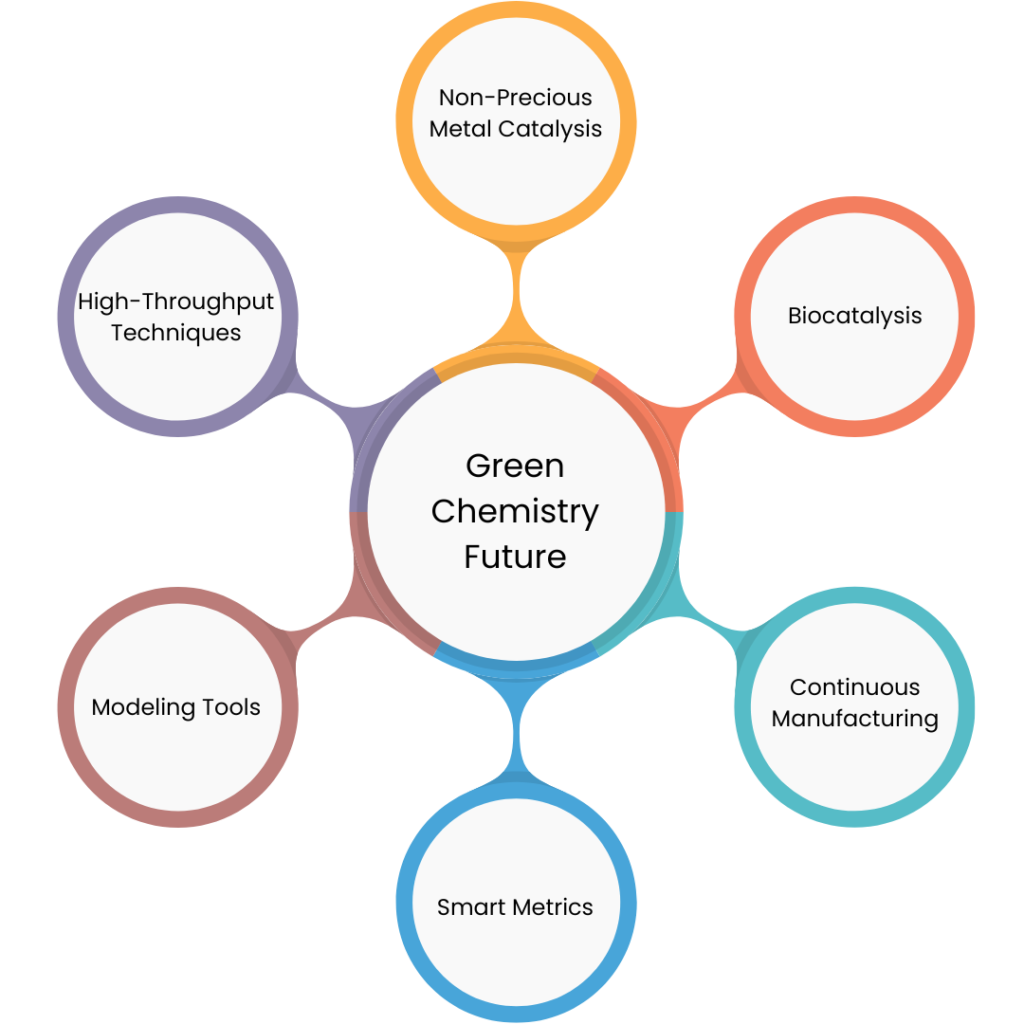
Core Applications of Green Chemistry at Chieron:
| Green Principles | Key Focus Areas | Case Study |
|---|---|---|
| Prevention of Toxic chemicals | Toxic chemicals replaced. | Exploration of Biocatalysis process instead of chemical. |
| Ensuring atom economy | Maximum atom conversion into final products. | Lacosamide & Olmesartan |
| Less hazardous chemical syntheses | Replacement of toxic with non-toxic reagents. | Pyrophoric chemicals replaced with modified approach in Loxoprofen |
| Designing safer chemicals | Ease of operation & safety. | Multiple API synthetic routes |
| Safer solvents and auxiliaries | EHS convenient & eco-friendly. | Promoted aqueous water-based reactions |
| Energy efficiency & Catalysis | Lowering activation energy. | Olmesartan Medoxomil, Loxoprofen Na Hydrate |
| Telescopic Approach | One-pot multi-step synthesis. | Lacosamide, Olmesartan, Vildagliptin, Loxoprofen & CMO |
Governance & ESG Journey
Discover more about our extended sustainability initiatives, corporate governance framework, decarbonization targets, and long-term vision on the Glochem Industries website.